
Bau Nyale festival: when the sea gives a princess back
About the morning I joined thousands of people wading into the dark to catch sea worms in Lombok.
The alarm was set for 04:30, but I woke up before it went off, my first thought being “thank God it’s not raining”. By 04:45 I was on my bike: for once in my life the jet lag played in my favour.
The rainy season meant there wasn’t a single soul in Kuta, no backpacker looking for carbs, no security guys chatting to each other from one side of the street to the other. It felt good to be back in Lombok, I thought while zipping my jumper.
Fifteen minutes later I approached the MotoGP circuit area, threading through the empty asphalt maze that surrounds it. The name Mandalika has gained popularity outside Lombok thanks to this place, the Pertamina Mandalika International Circuit, which put the island on the map as an exotic spot for motor racing. But the story of Princess Mandalika goes back long before the hyper-modern track. So to reach the centuries-old tradition that gave the circuit its name, I first had to ride all the way around it.
Almost as soon as I turned right onto the dirt road leading to Seger beach, I started to cross paths with other motorbikes, most of them going the opposite direction. I started to think I was already late and sped up through the mud. Knowing the road well didn’t help, the rainy season gives roads new shapes. Princess Mandalika watched over me and I made it to the parking area when it was still pitch dark.
I do not even remember when I first heard of Princess Mandalika. Tales of well-behaved, self-sacrificing princesses do not usually catch my attention, I always had a soft spot for the anti-heroines and the tomboys. But when a legend creates a tradition that pulls thousands of people into the cold dark sea, I am suddenly all ears.
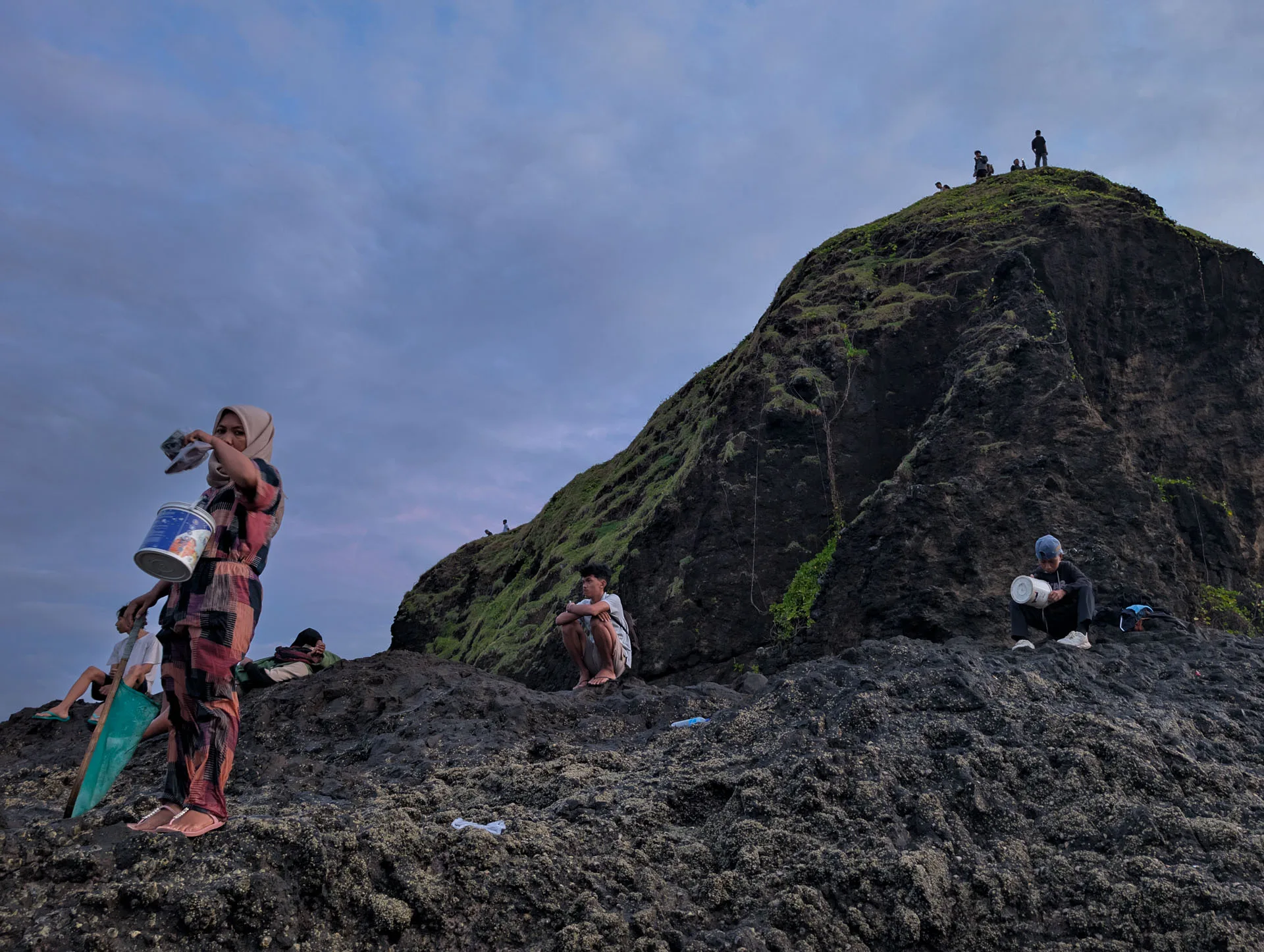
Here goes the myth. In the Sekar Kuning Kingdom lived Princess Mandalika, the daughter of Raja Tonjang Beru. She was, needless to say, beautiful, but also smart and humble. So many princes wanted to marry her that a civil war was about to break out. The princes were ready to fight, the king was ready to delegate and the choice landed on Mandalika. The princess summoned everyone to Seger beach on the 20th day of the 10th Sasak month. She stood on the cliffs and explained her decision: she would not choose one man; she belonged to everyone. Before anyone could figure out what that meant, she threw herself off the rock into the Indian Ocean. When the crowd scrambled down to find her body, all they found were millions of colourful sea worms, nyale. Every year since, at the same time, the tide has brought her back, piece by piece.
For most of the year, Seger belongs to surfers. For two days, it belongs to everyone. People camp on the hills around the bay for a vigil of music and food, waiting to meet Princess Mandalika in her reincarnated form: to receive her blessing, honour her sacrifice and harvest a seasonal delicacy. This year, I joined them. I did not really know what to expect. Would people welcome me, or would I just be an awkward outsider?
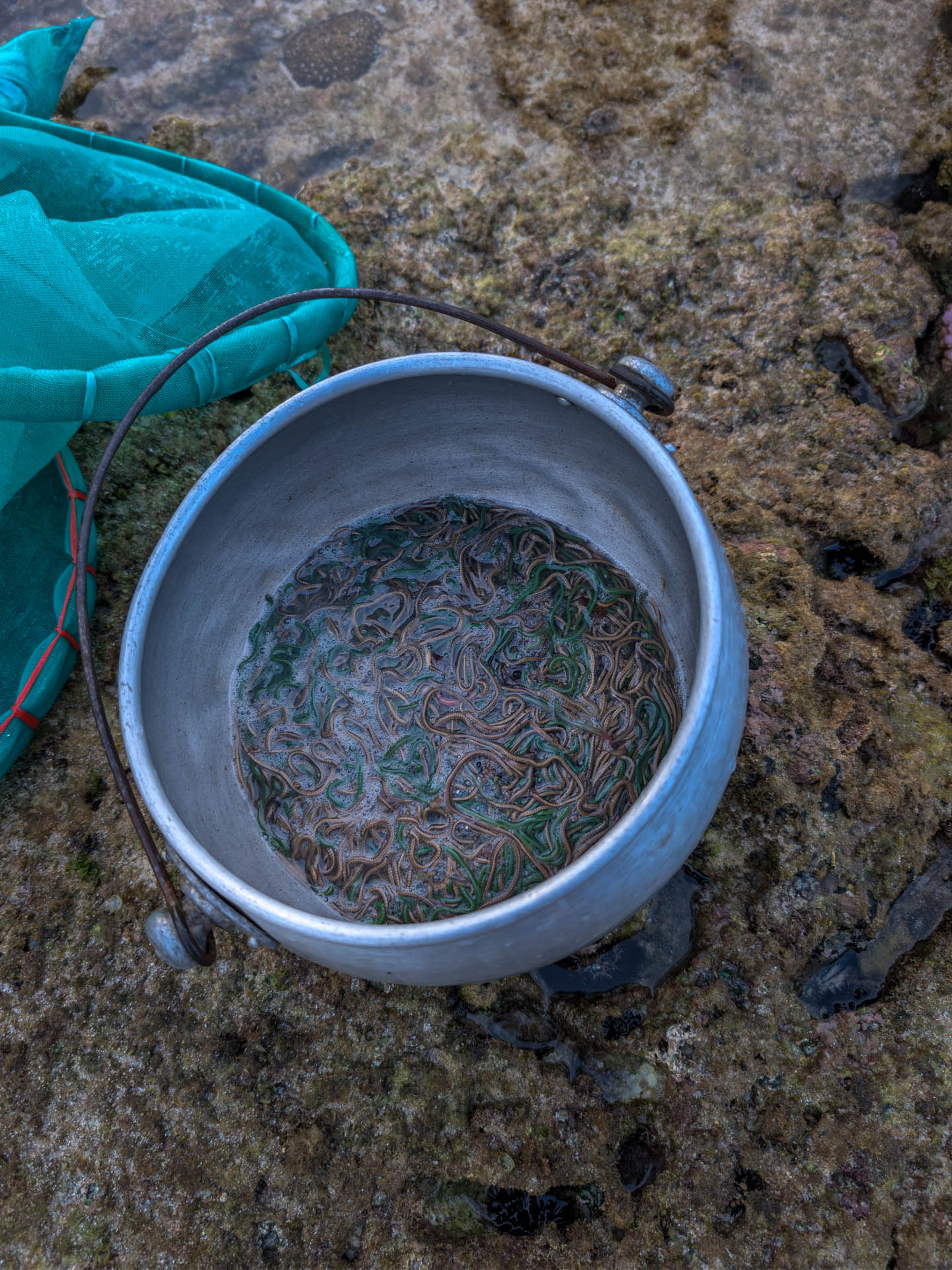
I got my first hint a few minutes later over a Lombok coffee, when a man overheard me speaking Bahasa Indonesia. Totally overestimating my language skills, he popped open his box to show off his catch from the night before and went on to give me harvesting tips. Inside, there was a mass of green, reddish-brown and pale pink strands swirling in a shallow layer of seawater. A few were clinging to the clear walls, trying to climb their way up. They were much thinner than I had expected and I immediately found myself wondering about the culinary logistics of it all and whether the taste would actually reward the hustle. Nyale are polychaetes, marine bristle worms that rise from the reef to spawn a few nights after the February full moon. The Sasak calendar follows the same moon, and every December an assembly of elders sits down to work out the date and announce it.
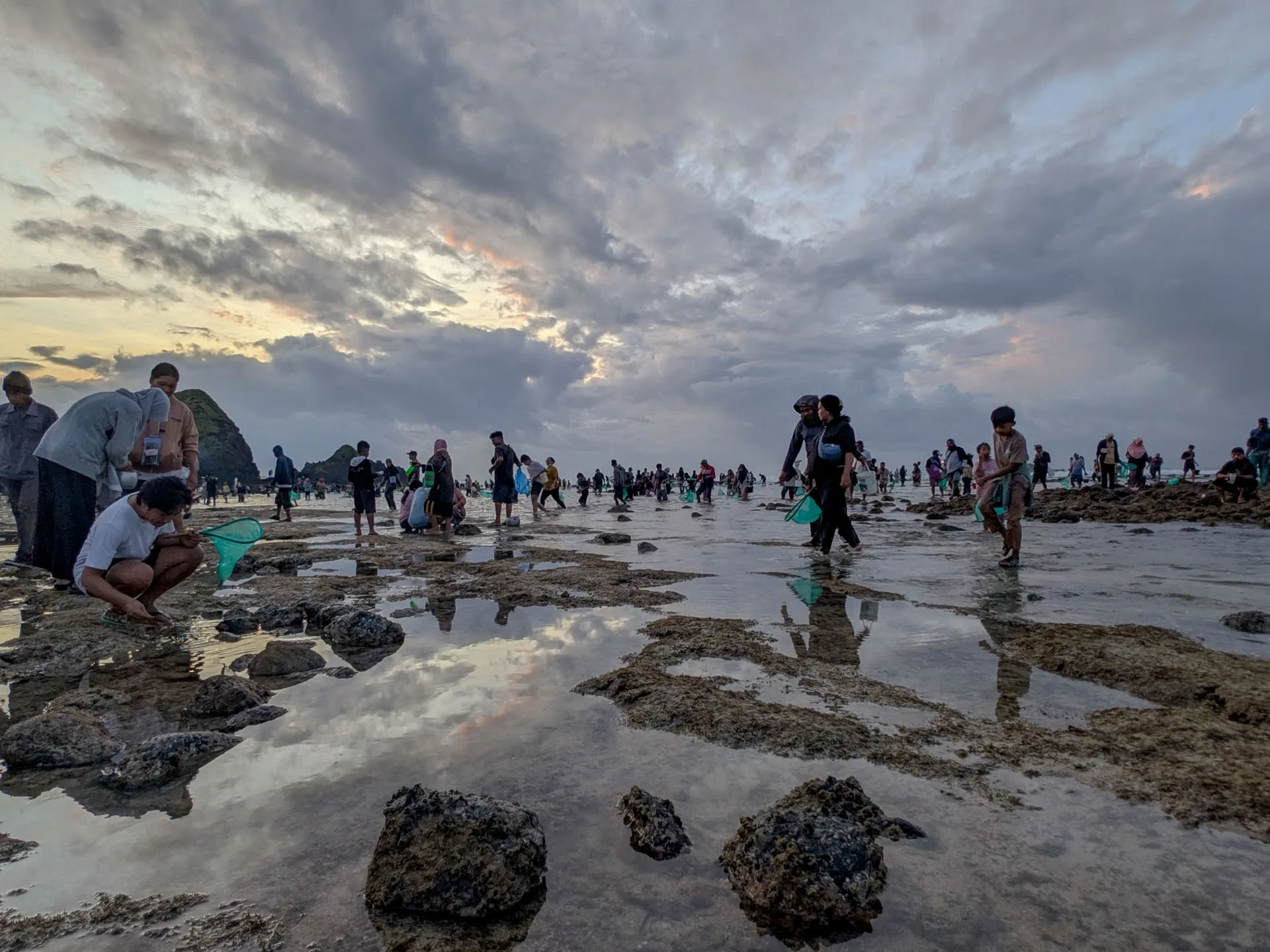
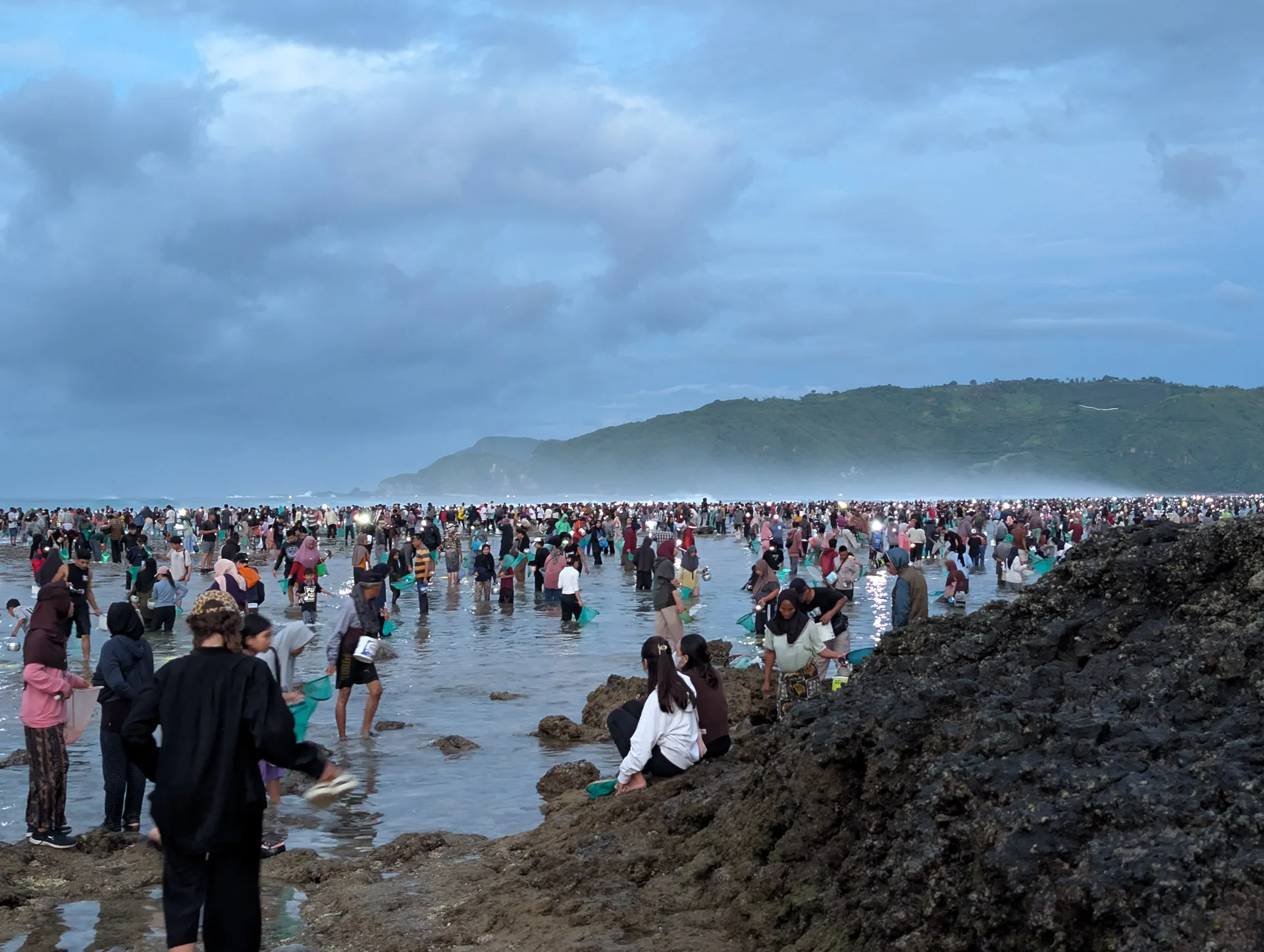
I thanked him for the advice and made my way down past the wooden huts to the beach. Looking out across Seger, I could see the shore covered in hundreds of moving lights: headlamps and phone torches flickering across the dark water. The tide was low, and people were standing ankle-deep from the inner tide pools all the way out to the reef break, nearly everyone clutching a long bamboo pole with a bright green or blue mesh net at the end, ready to scoop. Looking right, I could see the same scene stretching across the neighbouring bays, all the way to Mandalika beach in Kuta.
I joined them, hoping to be lucky enough to spot an octopus or some other stray reef creature. I gave up quickly and soon I found myself chatting to people, my Bahasa Indonesia being only good enough to ask them how they preferred to eat the worms. Goreng, fried, was the most popular answer. “Would you eat them?” was the most popular question I got. Spoiler: I did, goreng of course, but I have eaten tastier worms elsewhere.
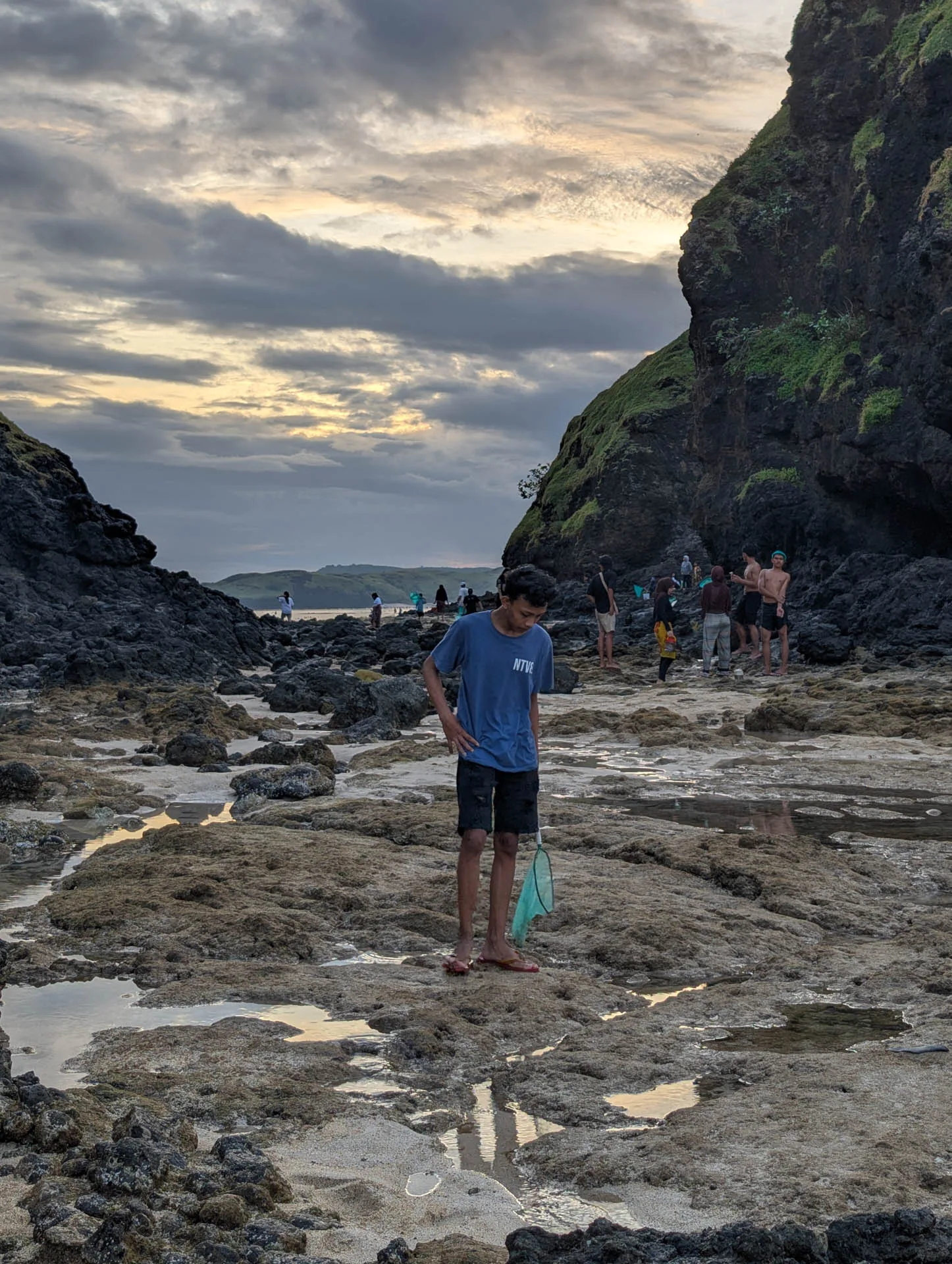
I could tell that a lot of people had travelled from villages outside Kuta. While people living in Kuta are used to seeing bule (white foreigners), many of those from the area outside the tourist radar are not. Before long, I was being asked to pose for group pictures. As always, the women asked first, confident and completely in charge. They would gather as many family members as possible with a single loud shout and organise everyone into formation, dragging me into the centre of three different group variations before I even knew what was happening. I ended up in far more festival photos on other people’s phones than I managed to take on my own.
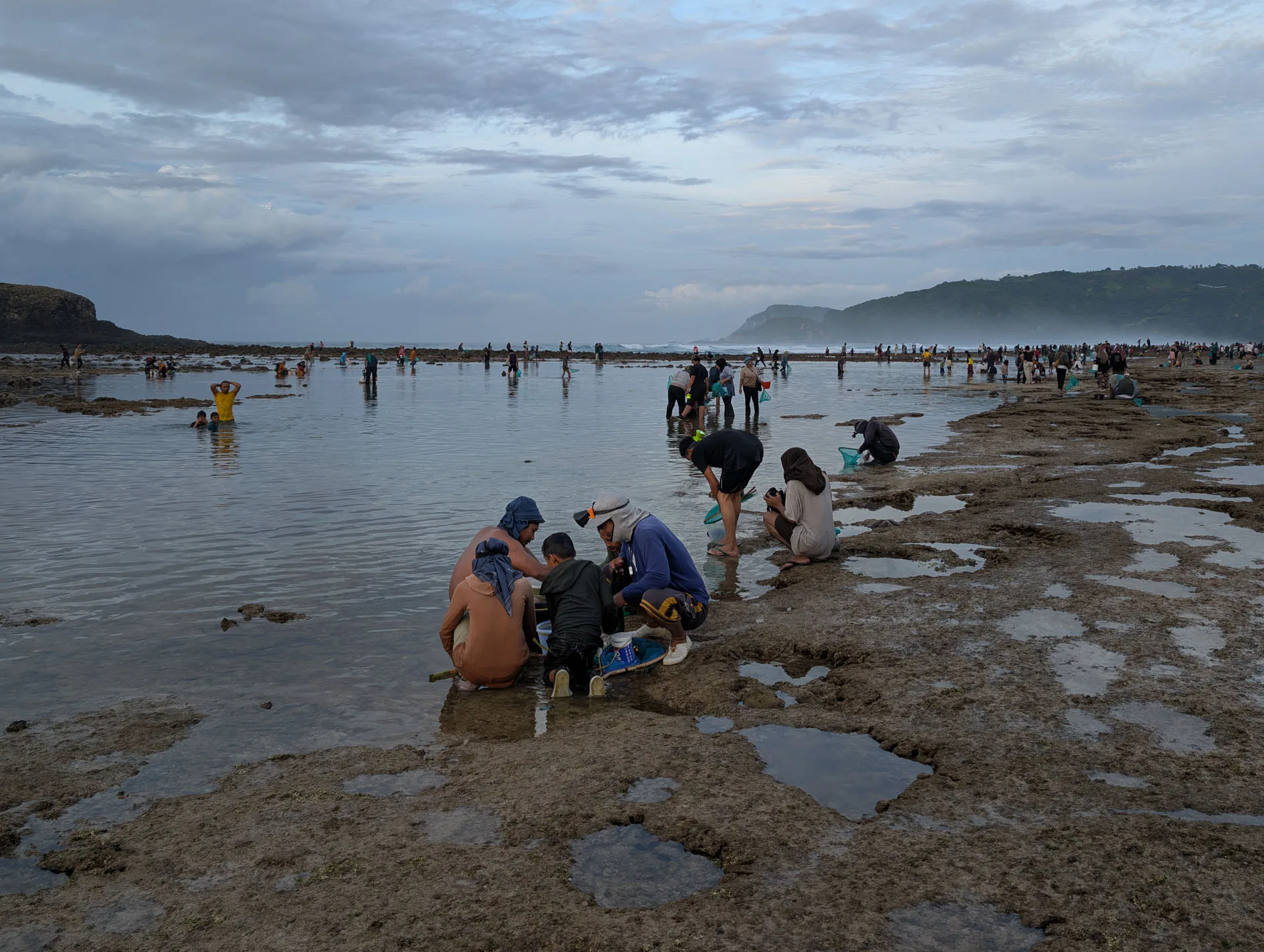
Once the photos were sorted, the personal questions started, in a mix of Sasak and Indonesian. What seemed to surprise them most of all was that I was there alone: if I was married, why wasn’t my husband with me? In a place where an ancient princess threw herself off a cliff to keep the community together, coming to Bau Nyale alone was hard to understand.
By six o’clock, a muted grey daylight broke over Bukit Seger. The humid breeze rolled off the reef, and people were already retreating to the beach, buckets in hand, to rest. I bumped into a girl whose English was far better than my Indonesian. She had come down from Mataram, the capital, for a weekend away and, unlike me, had no intention of eating the worms. For her, the myth has survived because it still reflects who the Sasak are and what they value. Even these days, people put the community before the individual, love included: who you marry is a family matter as much as a personal one. Besides, as she pointed out, Indonesians love a dramatic romance.
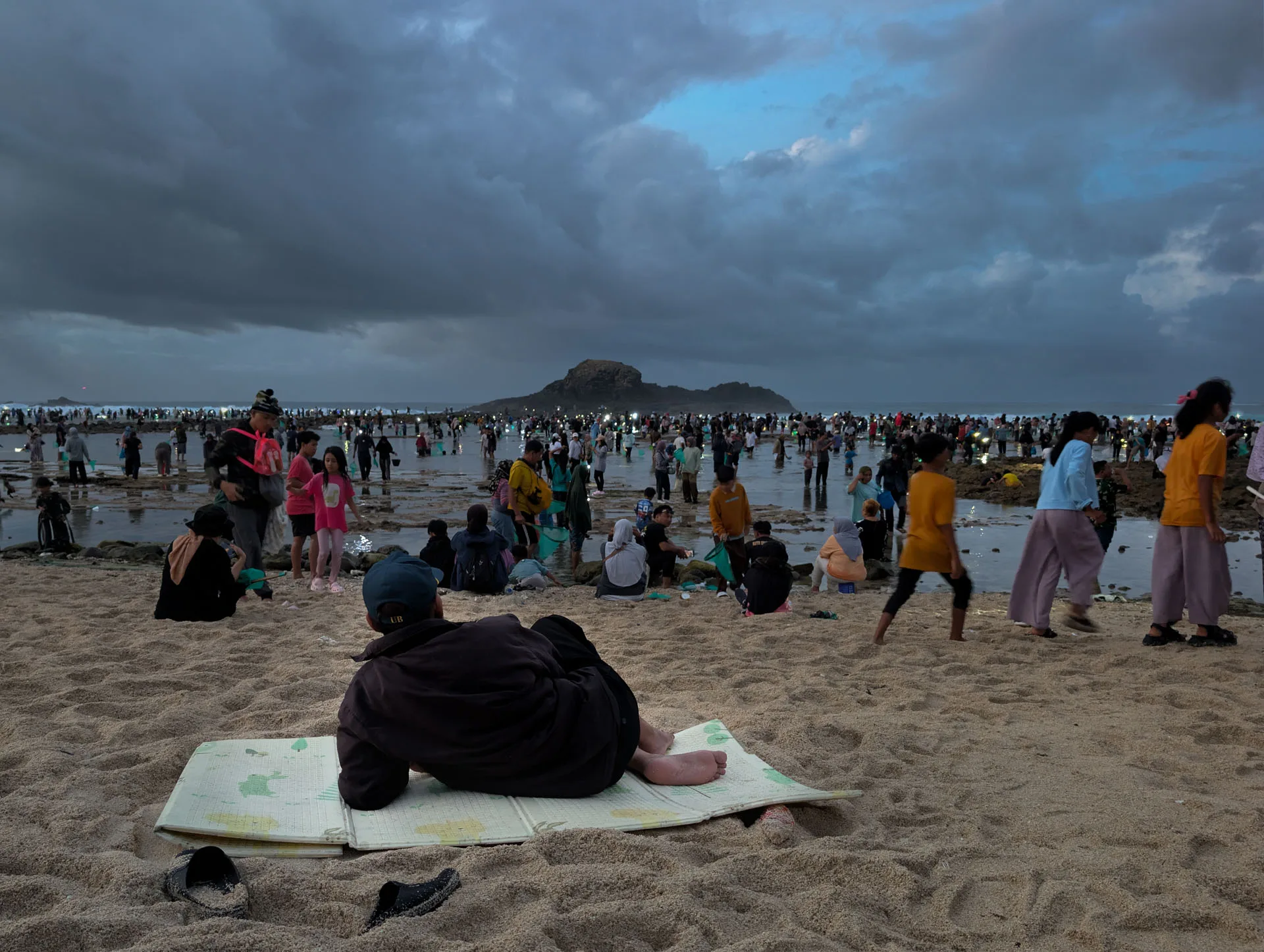
Later, I found a paper by Indonesian researchers on the myth. For the Sasak, they write, the sea is both a source of food and a power that deserves respect. It took Mandalika, and every year it gives her back. That morning, it was giving her back in buckets. The same paper reads her as a woman who took her community’s fate into her own hands. Maybe she belongs with my anti-heroines after all.
Source: Suryadmaja, Utari, Haryono and Ningsih, “Analysis of Levi-Strauss’s Structuralism on the Myth of Princess Mandalika”, Global Journal of Social Learning, 2025.