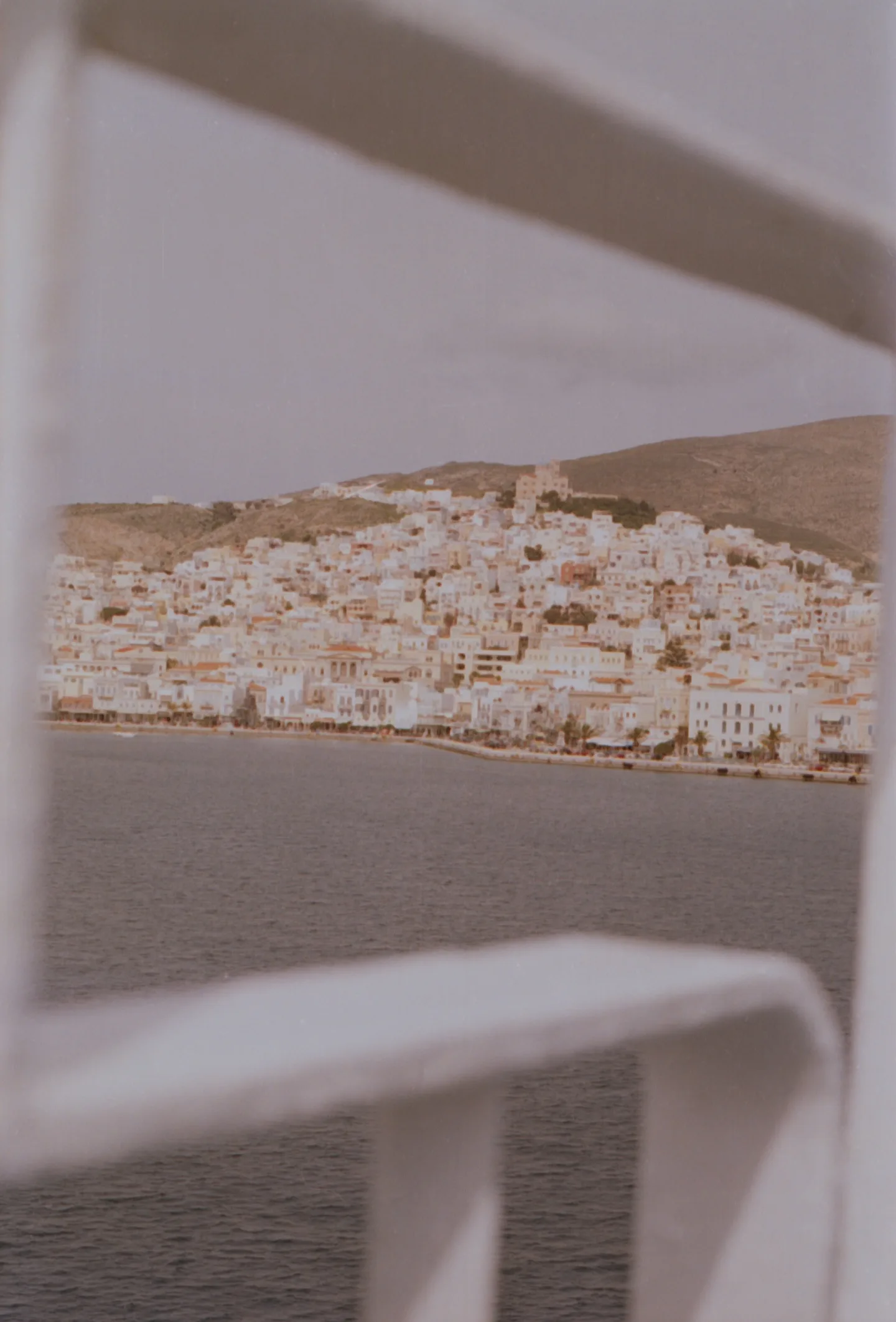
A choreography of docking
Notes from someone who still gets a thrill from catching a ferry in Greece.
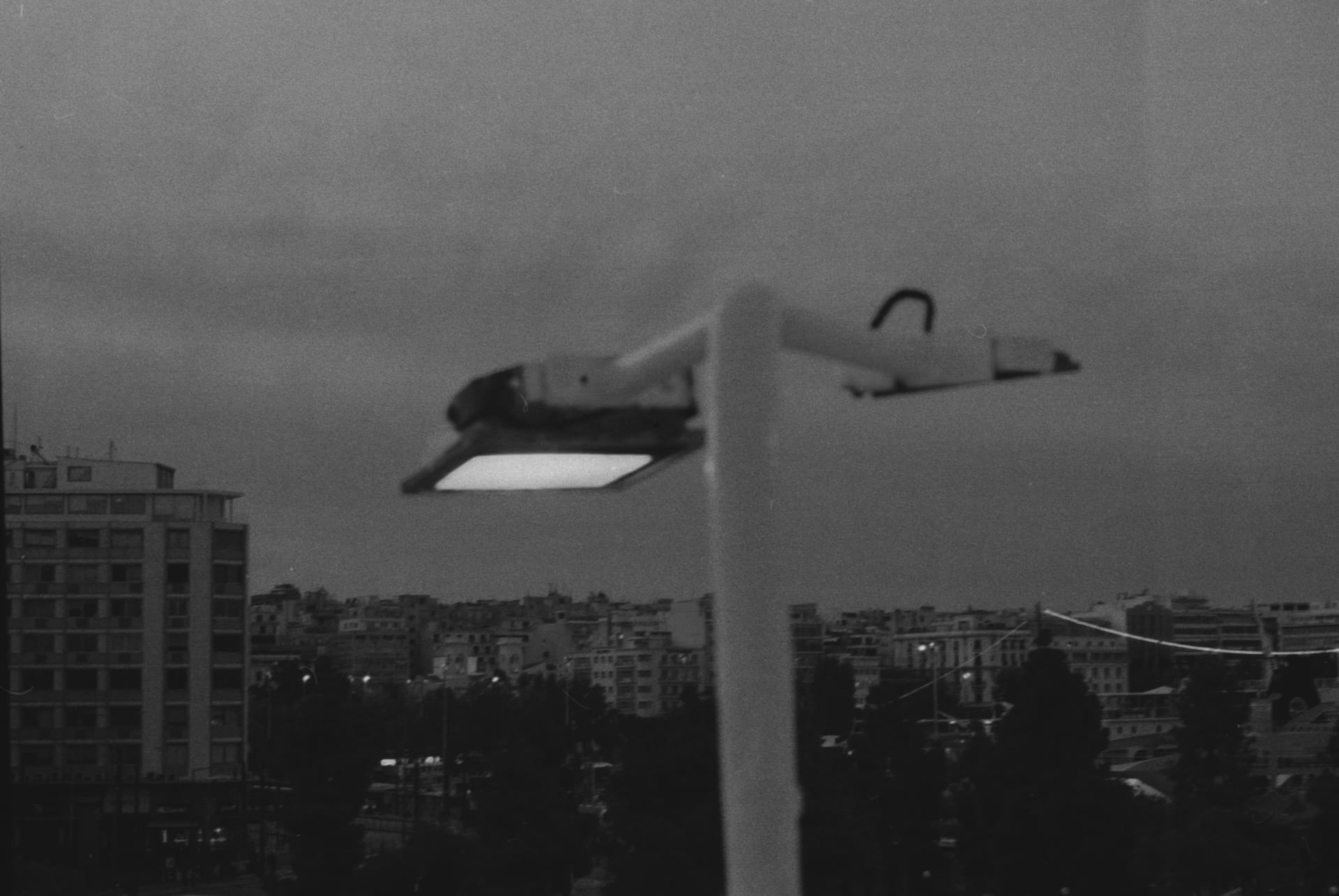
I arrive early, way before I need to. But it’s not because of the kind of anxiety that sometimes has me turning up at the airport ahead of time, huffing and puffing in queues bathed in the glow of neon lights. When I go to the harbour to board a ferry, I love arriving at the empty forecourt and parking somewhere in the middle of it all. Then running towards the water’s edge, waiting to spot my ship. If I’m on foot, it’s no different. I arrive early, spot the right pier, then look for a café (for a cold or hot brew depending on the time of day or the season) and scan the quays, searching for the right ship.
I have a memory of my first ferry; it was one of those really big ones that connect Liguria to Sardinia. My mother, all excited, pointing towards the sea, said, ‘There it is, there it is, it’s coming! The ferry!’ I remember the confusion when I was staring at a tiny, dilapidated boat, then the laughter when we realised that it was a small fishing boat and I hadn’t even spotted the huge ship alongside it, too massive to fit into my child’s field of vision.
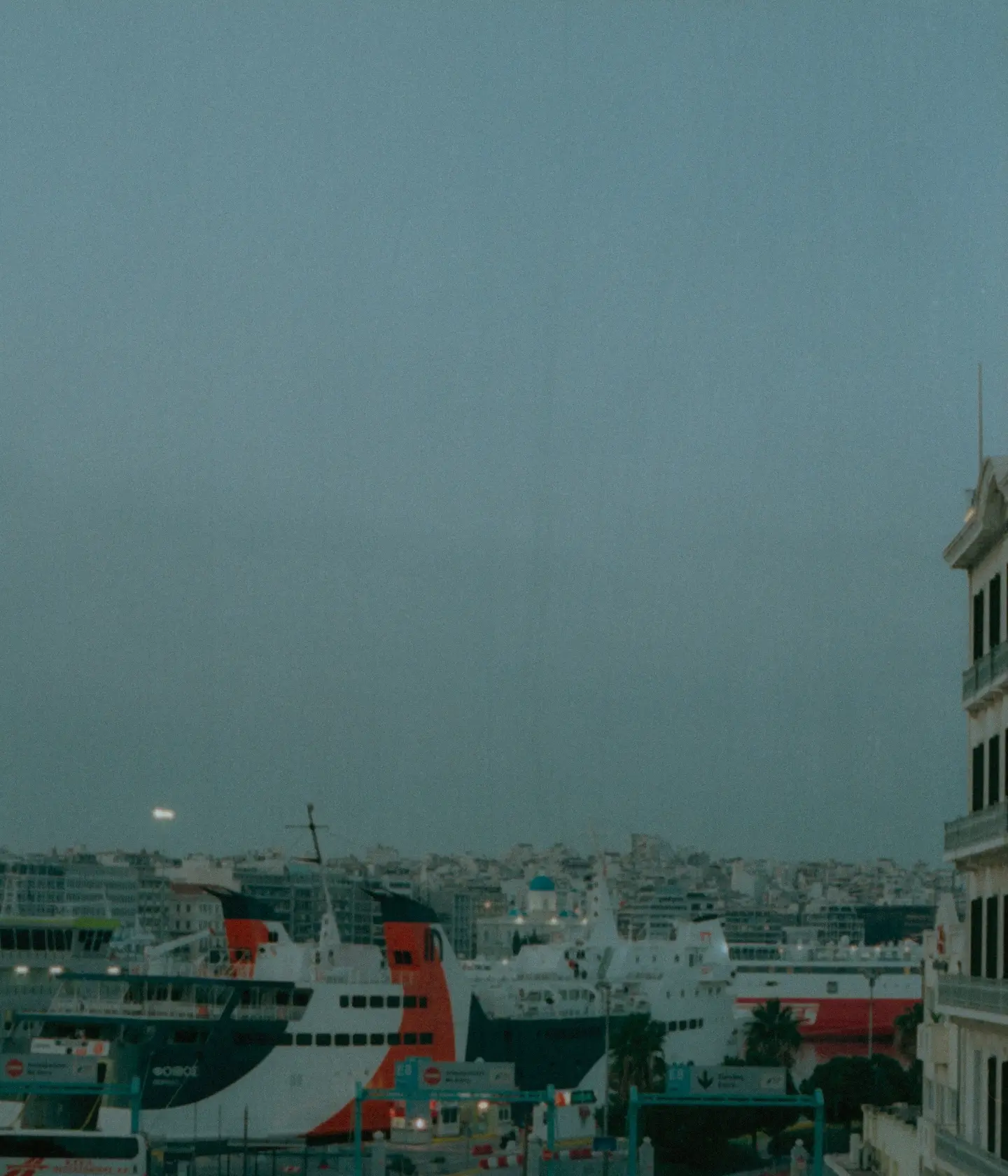
That thrill returns every time; I find myself tapping my feet with anticipation as the ferry takes shape on the horizon, as it approaches with manoeuvres that part the water, aided by men shouting, throwing ropes, smoking, running here and there, in a chaos that seems orchestrated, a sort of choreography of docking, capable of being staged day after day, from dawn until late at night, in the small island harbours, just as in the great Piraeus port.
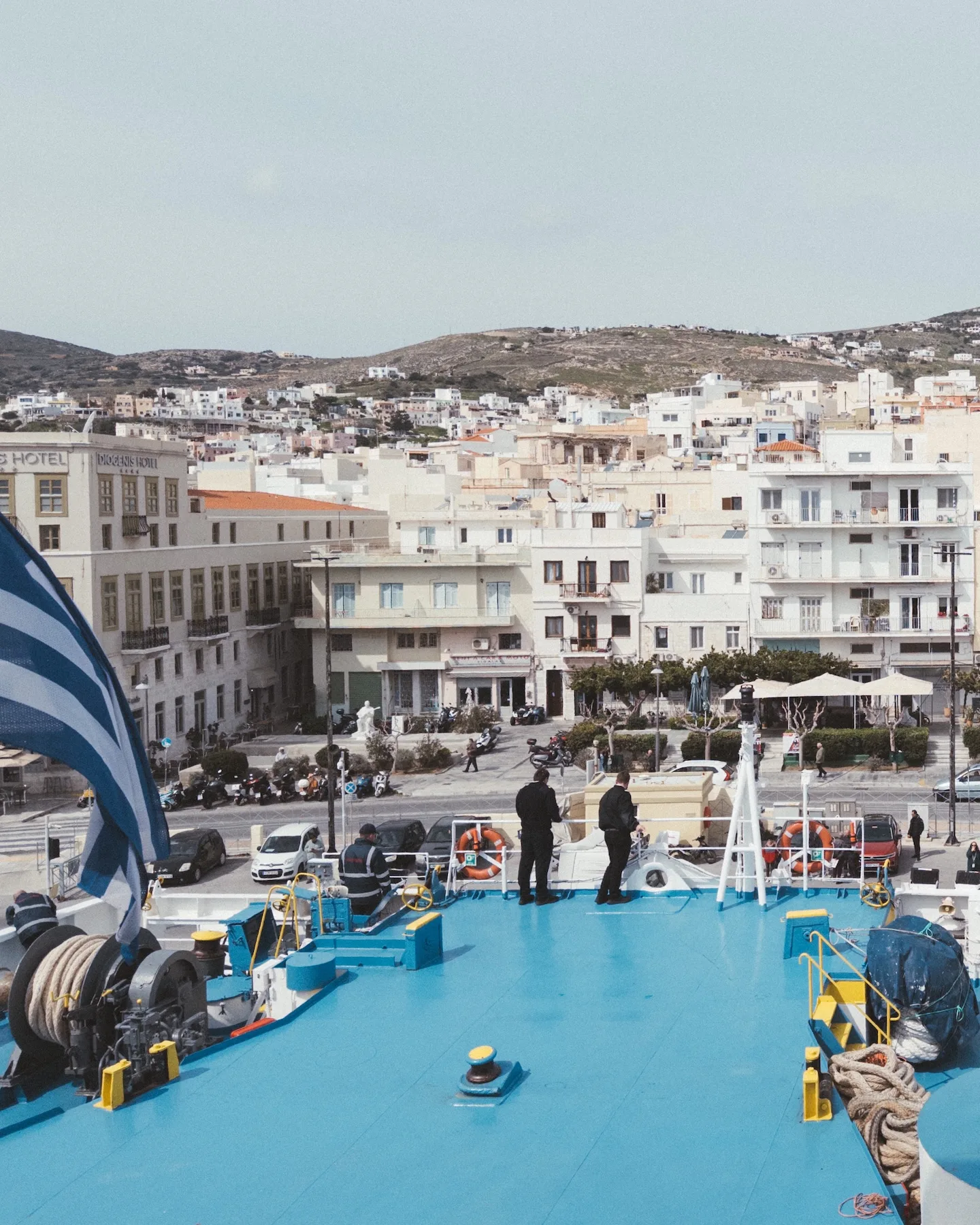
It is the harbour that determines how the wait will unfold. In Piraeus, you need to give precise directions to the taxi driver, to find a parking space, board the shuttle bus that circles the harbour, join the right queue and then wait on one of the many benches. But there is also room to imagine the port as it was in the early 1900s, with the steamships ferrying migrants back and forth, accompanied by a whole flock of music and instruments, and cultures arriving in or departing from Athens for the very first time.
In the small ports of the islands, in Greece as elsewhere, the ferries set the rhythm of the day. And the smaller and more remote an island is, the more the ferry still holds this ancient power to act as a link with the outside world. All information travels effortlessly across the sea, but people, with their ways of looking at the horizon, their different dialects, their arrogance, their curiosity, their desire to fall in love, they arrive in the flesh.
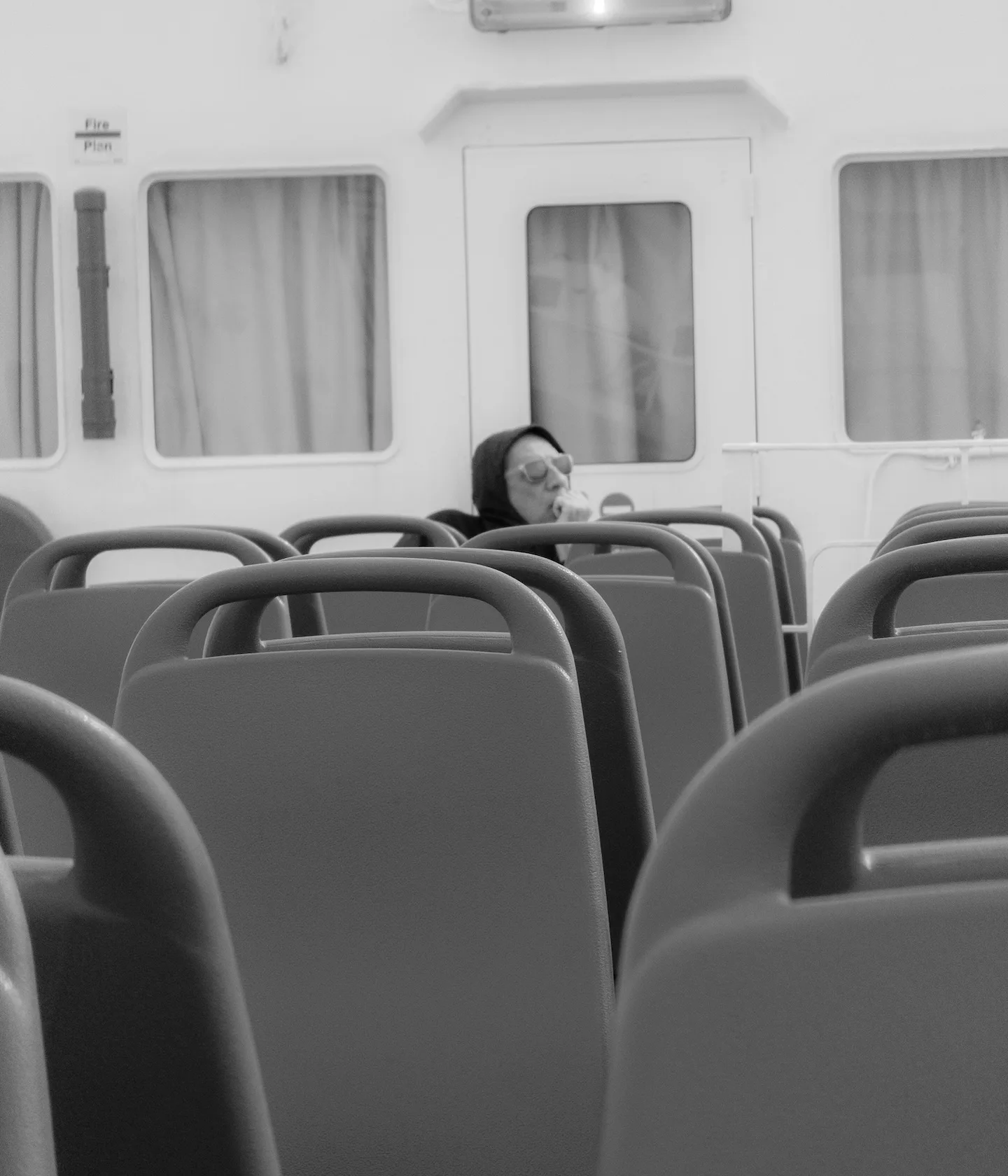
Then the sailors open the hatch, people go down and come up, the sea churns. Perhaps right now, there is someone who does not yet know that they will end up settling on this very island, letting the sea carve out a new space and time between who they are and who they will become. Perhaps it is me, I ask myself every time.